

[Exam Preparation] ACCA - AFM
Updated: May 27, 2025
The ACCA Advanced Level exams, particularly AFM (Advanced Financial Management), involve a lot of calculations requiring step-by-step workings and textual explanations. Besides demanding a deep understanding of the subject matter, exam techniques are also quite crucial.
I achieved a decent score back then, so before I completely forget everything, I want to share my experience for future candidates to reference.
When I Took the Exam: March 2024
Preparation Time: About one month (*). I was working full-time, so I studied after work. Took a week off before the exam to focus on revision.
Background: No business background during university, so no exemptions from any papers… I took all 13 ACCA papers one by one.
(*) If you don’t want to destroy your liver, I’d suggest allocating more time for practice.
Why Choose AFM?
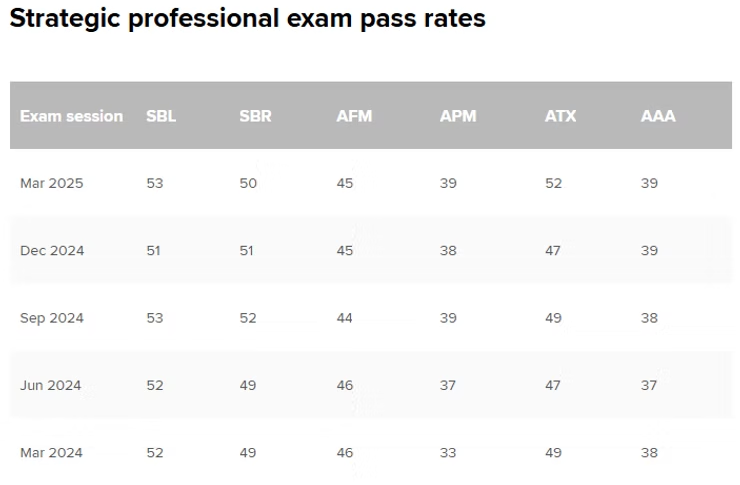
Among the four Advanced Level papers, AFM has the second-highest pass rate. I didn’t want to study Tax, so I picked AFM, the second easiest option.
AFM involves calculations, and its scoring points are clearer compared to the more qualitative AAA and APM papers (though another paper I took is APM...).
My previous job involved writing credit applications, so financial statements felt somewhat familiar.
Learning Resources Used
ACCA Official Portal Past Papers, Mock Exams
Extremely similar to actual exam questions, highly relevant for practice.
Don’t just look at the answer key; you must review the marks allocation at the back.
You don’t need to memorize everything, but you should have a rough idea of “what to write here to score how many marks.”
ACCA exams don’t just grade the final answer; your calculations and textual explanations during the process are the real scoring gems.
ACCA Official Examiner’s Reports
These reports provide detailed descriptions of common candidate mistakes and ACCA’s grading criteria.
Topics where past candidates frequently erred are likely to remain key focus areas.
After completing past papers from a specific year, review the examiner’s report to understand what candidates got wrong and remind yourself to avoid the same mistakes.

Acowtancy - Textbook
Used to check concepts when I didn’t understand certain points while practicing questions.
Side Note: I hate reading textbooks for any professional exam… I once bought Kaplan books, but after spending hours reading, I honestly couldn’t remember anything. The worst part was feeling completely powerless when doing questions, not knowing what I was doing.
For me, instead of spending time reading books I won’t remember, I’d rather dive straight into question banks. If I don’t understand something, I look it up and drill down until I fully get it.
This is just my learning style. I know plenty of friends who must read textbooks; some even do the opposite—only read books and do exercises at the end of chapters without practicing question banks. Everyone should use the revision method that works best and feels most comfortable for them!
Exam Techniques
Understand Every Number as a Cash Flow Item
Questions described purely in text can be hard to grasp. I suggest drawing a timeline while reading the question. This makes the cash flows and discount factors much clearer, reducing the chance of calculation errors.


Memorize Multiples Formulas
Sometimes, a question seems simple, like “evaluate XXX Co.’s financial performance and business situation.” But it’s worth 20 marks (plus 5 professional marks). To justify your arguments, you need to calculate a bunch of figures.
For example, for financial performance, calculate profitability (e.g., gross profit margin, compare with revenue trends); for business situation, calculate solvency (e.g., interest cover, gearing) and liquidity (e.g. current ratio, trade payable payment period).

AFM calculations, compared to CFA/FRM exam questions, are more complex. ACCA provides financial statements with lots of irrelevant “noise,” and you need to filter out what’s unnecessary. Sometimes, you need multiple steps to arrive at the required figure.
AFM isn’t multiple-choice, so guessing won’t help; it’s also not open-book like HKICPA/CPAA. If you’re not familiar with the formulas, you’re doomed.
Financial ratios aren’t hard to calculate, but you need to precisely remember what divides what, whether it’s pre-tax or post-tax, and whether interest is included.
Know How to Calculate and Explain NPV, FCFF, Futures Hedge, FRA, FX, etc.
Every paper will ask about some financial instruments—not all, but definitely some. The AFM question bank likely has several versions randomly assigned to different regions or sessions, so you can’t predict what you’ll get. There’s no shortcut—learn all the calculations, practice them multiple times, and be ready to regurgitate them during the exam.
Calculations might feel tough initially, especially if you didn’t study accounting or finance in university (like me). It takes time and effort to understand how each number flows and affects others. But once you get it, it’s like a lightbulb moment!
For the same instrument or valuation method, the calculations are generally similar across questions. Master them, and you’ll score well.

Textual Explanations Are Crucial
Besides calculations, textual explanations carry significant weight. If you understand the calculations, expanding on the numbers isn’t too hard. The challenge is knowing the assumptions behind what you’re calculating, its pros and cons, and whether the question provides sufficient and reliable data (i.e., exercising professional skepticism).
For example, with NPV, if required, you need to state assumptions like:
Transfer price – acceptable by the two countries' tax authorities as an "arms-length" transaction,
Tax rate – assumed to be constant throughout the project's life,
Spot FX rate – from a reliable source and future rate changes according to the Purchasing Power Parity, etc.
If the question asks for more factors affecting NPV accuracy, it’s time to exercise professional skepticism. My approach is always to “pick holes in the egg, find fault where there’s none” (which I find quite fun, haha).
If the question provides data, point out why it’s insufficient or unreliable and what’s missing, concluding it’s “difficult to assess in more detail.” If no data is provided, criticize the lack of necessary information.
For instance, if the question mentions expanding to a new country and market, note that performance in new markets is notoriously unpredictable, and forecasts may not be reliable.
Like arguing in real life, your critique needs to be specific (but professionally worded for professional marks) to stand strong!
Master the Report Format
The first question usually requires a report. During the exam, immediately outline the report format framework, as professional marks are at stake. These “free” marks must be secured.
The report format varies slightly depending on the question, but generally follows this structure:
=====
Report to the Board of Directors on XXXXX
To: The Board of Directors, XXX Co.
From: Financial Manager
Subject: Briefly state the purpose (e.g., XXX investment)
1. Introduction
This report shows and comments on how…
This report then discusses…
This report considers whether the XXX investment should be undertaken…
2. Subtitles Based on Question Requirements
Write short subtitles based on the sub-questions; the number of subtitles depends on the number of sub-questions (usually around 3).
3. Conclusion/Recommendation
The main content of the report comments on the results…
The report also addresses (the queries raised by the DoB) on…
4. Sign-off
Report compiled by:
Date:
5. Appendices
Appendix 1 (Part XX)
Appendix 2 (Part XX)
=====
Common Text-Based Questions: Real Option, Synergies (M&A), Financial Risk Management, Agency Problem, etc.
These concepts frequently appear in past papers/mock exams, often in textual explanation questions requiring scenario-based analysis.
If you don’t understand the underlying concepts, you can’t apply them to the scenario. So, during revision, thoroughly grasp these concepts. Simply memorizing the textbook won’t earn marks in ACCA—maybe a few, but not many.
Examiner’s Reports repeatedly emphasize that candidates must flexibly apply hard knowledge to scenarios.
Although the AFM exam is 3 hours and 15 minutes, the questions are long, requiring both calculations and writing. Time is tight. During revision, familiarize yourself with the answer framework and know roughly how many marks each section is worth.
Time management is critical. Don’t write excessively on one point, as you’ll only get the maximum marks for that section while wasting time on others. The official answer key’s marks allocation is highly useful.
ACCA’s model answers for long questions are excellent and must be studied carefully. From my experience, for AFM, it’s better to study deeply than to do tons of questions. Of course, doing just one or two papers is too little…
I only did 3.5 past papers, which is relatively few. I strongly suggest doing more if time allows.
What did I do well? I drilled deeply into every question, like “eating a chicken drumstick down to the marrow” LOL.
Since I didn’t study anything related in university, I focused on breaking down every number and textual explanation, memorizing segments, and extracting answer techniques from model answers—especially how to apply theory to scenarios—so I could replicate them under time pressure during the exam.
If you studied related topics in university and find PV, derivatives, or financial ratios a piece of cake, I suggest focusing more on textual explanations and answer techniques, as AFM heavily tests both hard and soft skills.
Good luck!!
Comments